Sneezing Does Not Always Mean Infectious Rhinitis
A number of factors contribute to the development of rhinitis (snuffles) in rabbits, many of which can be influenced to prevent the disease from manifesting.
Causes of Rhinitis in Rabbits
The primary infectious agent is mainly the bacterium Pasteurella multocida and its respective serotypes. These are part of the natural microflora found on the mucous membranes of the upper respiratory tract. In healthy rabbits kept under good living conditions, clinical signs usually do not develop. The disease typically appears in connection with the overgrowth of this bacterium as a result of stress.
The causative agent is transmitted by direct contact, but also indirectly via equipment, the breeder’s clothing, etc. It does not tend to spread over long distances via airborne droplets.
Factors Contributing to the Visible Onset of Rhinitis
Concentration of Stable Gases in the Air
Rabbits are particularly sensitive to higher concentrations of ammonia, which mainly originates from the decomposition of feces and urine. Long-term exposure leads to irritation of the mucous membranes and a reduction of the natural protective barrier. In covered outdoor housing systems, this problem is rarely encountered.
Infrequent Cleaning of Housing Areas
Especially during the summer and while raising young rabbits, more frequent cleaning of cages is necessary. Accumulated feces also act as an undesirable source of heat.
Dustiness
Rabbits do not tolerate dusty environments. Attention must be paid to the physical quality of the feed provided (hard pellets, properly cleaned grains after harvest), as well as the quality of straw and hay. For pet rabbits, special almost dust-free bedding materials are available. Increased dust levels are often associated with lower air humidity (approximately below 40% relative humidity).
Temperature and Humidity Discomfort
The optimal thermoneutral zone for a healthy adult rabbit is approximately 15–17°C (59–63°F). Rabbits can generally tolerate temperatures between 5–22°C (41–72°F) without problems. Higher temperatures are tolerated poorly, which is reflected in a rapid decrease in their immune resistance.
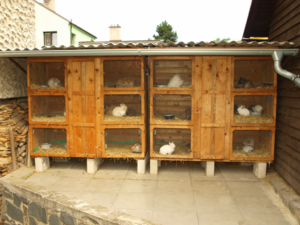
Fig. 1 Covered outdoor rabbit housing reduces the incidence of rhinitis
Overcrowding
Overcrowding of cages, especially among young rabbits, leads to higher disease incidence, increased production of stable gases, and aggression.
Age
In general, older animals and young rabbits are more susceptible to diseases.
Sudden Dietary Changes
Rabbits usually react negatively to sudden changes in diet, which may result in serious digestive problems. The standard is a pelleted diet with optimal nutritional composition according to age, physiological condition, and breeding purpose.
Poorly Balanced Diet and/or Feeding Technique
Significant deviations from recommended nutrient levels (especially excess protein and starch and insufficient fiber) are quickly reflected in the health of the rabbit’s digestive system and overall performance. Completely ad libitum feeding of concentrated feed can be considered inappropriate. Dividing the daily ration into smaller portions so that the rabbit consumes each portion within approximately 30 minutes appears to be a much better feeding technique.
The factors mentioned above are only the most common influences. Rabbit rhinitis is a complex problem that requires solutions primarily in the area of preventive measures. However, by adhering to basic zootechnical, hygienic, and epizootological principles, the occurrence of rhinitis in rabbit breeding can be significantly reduced.
As part of basic “breeder-level” diagnostics, it is recommended to examine the inner surfaces of the front legs. Note that some rabbits may suffer from allergies, so do not confuse allergies with infectious rhinitis. In cases of infectious rhinitis, the inner surfaces of the front legs become soiled due to chronic mucopurulent nasal discharge.
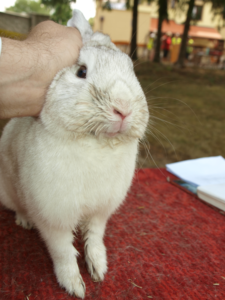
Fig. 2 In infectious rhinitis, there is pronounced long-term nasal discharge and soiling of the front legs
Související články
19. února 2026
Zveřejnil: Ing. Lucie Humeni
V drobnochovech hospodářských zvířat se často pracuje s menšími objemy krmných směsí. Není proto výjimkou, že chovateli zůstane část granulí nebo sypké směsi i po datu (expirace) minimální trvanlivosti. Lze takové krmivo ještě dále zkrmovat?
10. dubna 2024
Zveřejnil: Ing. Lucie Humeni
Chov zakrslých králíků jako domácích mazlíčků získává stále více příznivců. Nevyžaduje velké množství prostoru a je ideální pro lidi, kteří žijí v menších domácnostech nebo bytech. Zakrslí králíci jsou také velmi přátelští, takže se není čemu divit, že si je lidé vybírají pro tento účel čím dál častěji. Stejně jako u všech zvířat je i…
30. srpna 2022
Zveřejnil: Tým specialistů na chov králíků De Heus
V tomto článku se budeme věnovat několika nemocem králíků – ušnímu svrabu, Tyzzerově chorobě a tepelnému stresu.
24. srpna 2022
Zveřejnil: Tým specialistů na chov králíků De Heus
V tomto článku se podíváme na dvě nemoci – E.coli a enterokolitida
2. srpna 2022
Zveřejnil: Tým specialistů na chov králíků De Heus
V tomto článku se podíváme na dvě časté nemoci králíků myxomatózu a infekční rýmu.
Související produkty
KRÁLÍK ZAKRSLÝ
Kompletní granulované krmivo pro zakrslé králíky s vysokou stravitelností. Obsahuje vysoký podíl vlákniny (vysoký obsah vojtěšky a travních úsušků) a snížený obsah cukru a škrobu. Obsahuje lněné semínko, které má pozitivní vliv na kvalitu srsti. Vhodné pro každodenní krmení. Doporučujeme zajistit králíkům nezávadnou čerstvou vodu a seno.
KRÁLÍK CHAMPION
Krmivo pro výstavní králíky, neobsahuje kokcidiostatika. Unikátní složení významně podporuje kvalitu a růst srsti. Podávejte při přelínávání a minimálně 2 měsíce před zahájením výstavní sezóny.
KRÁLÍK GOLD FORTE
Prémiová krmná směs ideální svým složením pro březí a kojící samice. Pro intenzivní výkrm králíků do období min. 5 dnů před porážkou. Podporuje rychlý růst, zmasilost a výborný zdravotní stav. Obsahuje kokcidiostatikum, čímž snižuje riziko úmrtnosti.
KRÁLÍK KLASIK FORTE
Určená pro výkrm králíků až do doby min. 5 dní před porážkou. Vhodné pro dosažení vysoké zmasilosti a výborného zdravotního stavu. Díky obsahu kokcidiostatika snižuje mortalitu zvířat.
KRÁLÍK KLASIK
Pro celou dobu výkrmu králíků. Podporuje vysokou zmasilost a vynikající chuťové vlastnosti králičího masa. Bez kokcidiostatik.
KRÁLÍK START
Pro mladé králíky od začátku příjmu krmiva do 4–6 týdnů po odstavu. Krmivo pomáhá významně snížit úhyn v období okolo odstavu. Obsahuje zvýšený podíl vlákniny a méně škrobů. Neobsahuje kokcidiostatikum.