Appropriate and inappropriate breeders practices when feeding rabbits
Small-scale animal husbandry is also characterized by a certain degree of “folk creativity.” This mainly concerns technologies and techniques used in housing and feeding rabbits. Some of these practices have shown such positive effects that they have become routine in these farms. Other habits, however, are less suitable and may cause problems with the performance and health of the animals kept.
Inappropriate feeding practices in rabbits
Feeding rabbits is particularly challenging because they are relatively sensitive animals when it comes to changes and the quality of their diet. The following are examples of inappropriate feeding habits in rabbits.
Feeding dry bread
The tradition of feeding rabbits dry bread is deeply rooted in the Czech Republic. However, from a dietary perspective, it must be noted that feeding dry bread is not suitable for rabbits, especially if given regularly. Bread contains a significant amount of starch, which can cause digestive problems, particularly in high‑risk categories of rabbits (after transport, young rabbits, animals in recovery, etc.). There is also a risk of mold in improperly dried bread.
While it is true that rabbits can wear down their incisors by chewing dry bread, they can do so just as effectively with regular hard feed (grains, pellets, hay, etc.). Another disadvantage of feeding dry bread is its unstable moisture/dry matter content. In hutches, dry bread absorbs air humidity, making it even more dietetically unsuitable, particularly due to its bloating effects.
Feeding large amounts of dry bread to young rabbits, which do not yet have sufficient amylase enzyme activity to break down starch, can be considered catastrophic.
Overfeeding rabbits
The second most common mistake among rabbit breeders in the Czech Republic is the unnecessary overfeeding of rabbits with concentrated feeds. The rabbit’s digestive tract is generally not well adapted to digesting large amounts of concentrated feed, which reflects the rabbit’s natural feeding behavior in the wild.
The situation becomes worse when breeders provide concentrated feeds ad libitum. Besides being economically inefficient, this feeding technique has significant health disadvantages. Especially in high‑risk categories of rabbits, it often quickly leads to digestive problems, particularly if the rabbit does not receive enough roughage. Overfeeding also results in poor intestinal microflora.
By contrast, the “golden rule” in small‑scale rabbit breeding is to offer an amount of concentrated feed that the rabbit can consume within 15–30 minutes. Any leftovers should be removed until the next feeding (feeding 1–2 times per day). Roughage (e.g., hay) should be available regularly for most of the day, as well as fresh drinking water.
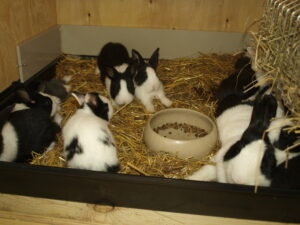
Fig. 1: A lactating doe and pre‑weaning kits represent a high‑risk category of rabbits.
Mistakes when feeding green forage
When feeding green forage, only limited amounts should be offered at one time – following the “golden rule” technique. Additionally, it is important to respect that some herbs are toxic in their green state.
Inappropriate watering and feeding technology
So‑called dual bowls, where one part is used for solid feed and the other for water, are hygienically unsuitable because cross‑contamination always occurs. This leads to rapid deterioration of both water and feed, posing health risks.
Inappropriate nutrient composition of diets
Especially in growing young rabbits before weaning, it is advisable to feed diets with a lower energy density. Particular attention must be paid to higher fiber requirements, which can be further increased by offering more hay or straw. Oat flakes, traditionally used for young rabbits, generally do not show a significant positive effect. Specialized diets and optimal feeding techniques should be preferred.
Frequently asked questions
-
What should form the basis of proper rabbit feeding?
The foundation of proper rabbit feeding is high‑quality hay, which supports healthy digestion and natural tooth wear. Rabbits should have unlimited access to hay. The diet can be supplemented with balanced complete feed, and fresh drinking water must always be available.
-
What are the most common mistakes in feeding rabbits?
Common mistakes include feeding bread, sweets, or kitchen leftovers. Inappropriate feed can cause digestive problems, obesity, or serious gastrointestinal diseases.
-
How often and in what quantity should rabbits be fed?
Rabbits should have hay available at all times. Complete pelleted feed should be provided in recommended amounts according to age, weight, and purpose (breeding, fattening, hobby). Overfeeding may lead to overweight and health problems.
- <
-
Can a sudden change in feed endanger a rabbit’s health?
Yes. A sudden change in the diet can cause diarrhea, bloating, or loss of appetite. Any dietary change should be made gradually, ideally over 7–10 days, so that the rabbit’s digestive system can adapt.
-
How can I tell if a rabbit’s diet is not properly balanced?
Warning signs include diarrhea, bloating, loss of appetite, weight loss, or conversely obesity. If these symptoms appear, it is advisable to adjust the feeding regimen and consult a nutrition specialist or veterinarian.
Související články
19. února 2026
Zveřejnil: Ing. Lucie Humeni
V drobnochovech hospodářských zvířat se často pracuje s menšími objemy krmných směsí. Není proto výjimkou, že chovateli zůstane část granulí nebo sypké směsi i po datu (expirace) minimální trvanlivosti. Lze takové krmivo ještě dále zkrmovat?
10. dubna 2024
Zveřejnil: Ing. Lucie Humeni
Chov zakrslých králíků jako domácích mazlíčků získává stále více příznivců. Nevyžaduje velké množství prostoru a je ideální pro lidi, kteří žijí v menších domácnostech nebo bytech. Zakrslí králíci jsou také velmi přátelští, takže se není čemu divit, že si je lidé vybírají pro tento účel čím dál častěji. Stejně jako u všech zvířat je i…
30. srpna 2022
Zveřejnil: Tým specialistů na chov králíků De Heus
V tomto článku se budeme věnovat několika nemocem králíků – ušnímu svrabu, Tyzzerově chorobě a tepelnému stresu.
24. srpna 2022
Zveřejnil: Tým specialistů na chov králíků De Heus
V tomto článku se podíváme na dvě nemoci – E.coli a enterokolitida
2. srpna 2022
Zveřejnil: Tým specialistů na chov králíků De Heus
V tomto článku se podíváme na dvě časté nemoci králíků myxomatózu a infekční rýmu.
Související produkty
KRÁLÍK ZAKRSLÝ
Kompletní granulované krmivo pro zakrslé králíky s vysokou stravitelností. Obsahuje vysoký podíl vlákniny (vysoký obsah vojtěšky a travních úsušků) a snížený obsah cukru a škrobu. Obsahuje lněné semínko, které má pozitivní vliv na kvalitu srsti. Vhodné pro každodenní krmení. Doporučujeme zajistit králíkům nezávadnou čerstvou vodu a seno.
KRÁLÍK CHAMPION
Krmivo pro výstavní králíky, neobsahuje kokcidiostatika. Unikátní složení významně podporuje kvalitu a růst srsti. Podávejte při přelínávání a minimálně 2 měsíce před zahájením výstavní sezóny.
KRÁLÍK GOLD FORTE
Prémiová krmná směs ideální svým složením pro březí a kojící samice. Pro intenzivní výkrm králíků do období min. 5 dnů před porážkou. Podporuje rychlý růst, zmasilost a výborný zdravotní stav. Obsahuje kokcidiostatikum, čímž snižuje riziko úmrtnosti.
KRÁLÍK KLASIK FORTE
Určená pro výkrm králíků až do doby min. 5 dní před porážkou. Vhodné pro dosažení vysoké zmasilosti a výborného zdravotního stavu. Díky obsahu kokcidiostatika snižuje mortalitu zvířat.
KRÁLÍK KLASIK
Pro celou dobu výkrmu králíků. Podporuje vysokou zmasilost a vynikající chuťové vlastnosti králičího masa. Bez kokcidiostatik.
KRÁLÍK START
Pro mladé králíky od začátku příjmu krmiva do 4–6 týdnů po odstavu. Krmivo pomáhá významně snížit úhyn v období okolo odstavu. Obsahuje zvýšený podíl vlákniny a méně škrobů. Neobsahuje kokcidiostatikum.