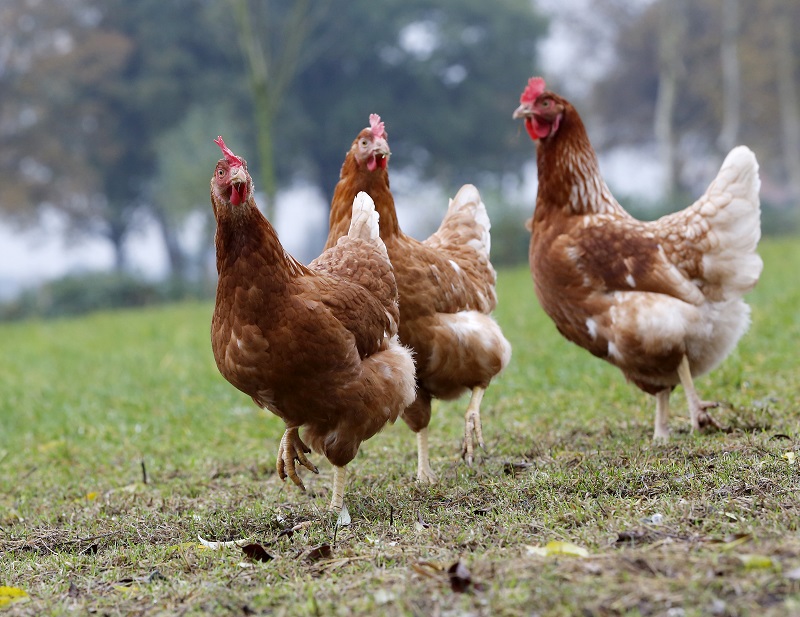
Feather pecking and cannibalism in laying hen flocks
Feather pecking and subsequent cannibalism are among the most serious behavioral disorders in laying hen flocks and can cause significant economic losses (e.g., reduced egg production, poorer feed conversion, and higher mortality).
Housing, space, and stocking density
Layers are social animals with a developed hierarchy. At high stocking densities (number of birds per m²), the following occur:
- more frequent social conflicts,
- limited access to feeders and drinkers,
- higher stress levels (physiological stress response).
Stress activates the hypothalamic–pituitary–adrenal axis (a hormonal regulatory system), leading to increased irritability and reactivity within the flock. If there is also insufficient satisfaction of feed intake needs, the risk of feather pecking increases significantly.
Not only the total available space is important, but also:
- feeder space per bird,
- number of drinking points,
- possibility for weaker individuals to escape.
Feather pecking often begins with lower-ranking hens that have limited access to resources.
Lighting program and light intensity
Light directly affects activity, feed intake, and hormonal balance. High light intensity increases irritability and enhances visual perception of details, including damaged feathers or reddened skin.
A long photoperiod:
- extends the period of activity,
- increases the frequency of interactions between birds,
- raises energy consumption.
If energy and amino acid requirements are not adequately covered, an imbalance arises between nutrient expenditure and intake. Therefore, light often acts not as the primary cause, but as an amplifying factor in the presence of nutritional imbalance.
Feeding technology as an intermediate factor between environment and nutrition
A highly underestimated factor is the feeding method itself:
- irregular feed distribution,
- fluctuations in feed quantity,
- overly rapid consumption of finely ground diets.
A short feeding time does not satisfy the natural pecking behavior. Hens have a biological need to forage and consume feed over an extended part of the day. If this need is restricted, their behavior may be redirected toward the plumage of other hens.
Nutrition
Only once housing conditions are stable does it make sense to address nutrition in detail. In practice, a fundamental problem often arises—not in the quality of the feed itself, but in its improper use. As manufacturers, we know that a complete feed mixture is formulated to meet energy, amino acid, mineral, and vitamin requirements when fed at the recommended daily intake. However, if the feed is under-dosed or diluted with cereals, or replaced solely with wheat and maize, a one-sided nutrient intake (unbalanced nutrient profile) occurs.
In an effort to “save costs,” farmers often reduce the daily ration below the recommended level. Hens then fail to reach the declared intake of:
- metabolizable energy (usable energy for the body),
- methionine and other essential amino acids,
- calcium and trace elements.
This deficiency may initially manifest not through obvious clinical signs, but through behavioral changes—such as increased nervousness, feather pecking, and later a decline in egg production. It is important to emphasize that feed formulations are based on a precisely defined daily intake. If a hen consumes 10–15% less feed, she automatically receives 10–15% less of all nutrients.
The combination of wheat and maize primarily provides starch (rapidly available energy). However, it lacks sufficient levels of limiting amino acids (especially methionine and lysine), minerals, B vitamins, and fiber. This results in a ration that is relatively rich in energy but nutritionally unbalanced. The hen may have sufficient energy while simultaneously suffering from a deficiency of structural and regulatory nutrients. This condition leads to plumage disorders, increased irritability, and the search for alternative protein sources—namely, the feathers of other hens.
A deficiency of methionine, an essential amino acid (which the body cannot synthesize), results in poorer feather quality, increased feather breakage, and a higher tendency toward feather pecking. Feathers contain keratin, which is rich in sulfur-containing amino acids. Feather pecking may therefore be partially compensatory behavior in response to their deficiency.
Conclusion
Feather pecking and cannibalism cannot be reduced solely to a problem of lighting or stocking density. These factors act as triggers, but very often an underlying nutritional imbalance is present. It is crucial to understand that a complete feed mixture is balanced only when administered at the recommended dosage. Once it is under-dosed or replaced with cereals, a one-sided nutrient intake arises, which may result in behavioral disorders. In most cases where the feed is properly dosed and not diluted, the occurrence of feather pecking decreases significantly.
Sources used in this article are available from the author, Ing. Lucie Humeni.
Frequently asked questions
1. What is the main cause of feather pecking in laying hens?
Feather pecking is a multifactorial problem. It most commonly arises from a combination of environmental stress (high stocking density, insufficient feeder and drinker space, inappropriate lighting) and nutritional imbalance, often caused by under-dosing or diluting complete feed mixtures.
2. How is stocking density related to cannibalism?
When too many hens are kept per m², conflicts become more frequent, access to feed and water is limited, and stress levels increase. Lower-ranking birds with restricted access to resources are most often attacked.
3. Can lighting influence the occurrence of feather pecking?
Yes. High light intensity increases flock irritability and makes damaged feathers or reddened skin more visible, which may encourage further pecking. A long photoperiod also increases activity and energy requirements.
4. Why is diluting feed with wheat and maize problematic?
Wheat and maize are mainly sources of starch (energy), but they do not contain sufficient essential amino acids, minerals, and vitamins. This creates an energy-rich but nutritionally unbalanced ration, which may lead to plumage disorders and an increased tendency toward feather pecking.
5. What role does methionine play in preventing feather pecking?
Methionine is an essential amino acid necessary for high-quality feather formation. Its deficiency leads to poorer feather quality and increased breakage. Since feathers contain keratin rich in sulfur amino acids, feather pecking may partly be a response to their deficiency.
Související články
5. srpna 2026
Zveřejnil: Ing. Lucie Humeni
Drůbež patří mezi hospodářská zvířata s velmi intenzivním metabolismem (látkovou přeměnou), který je základem její vysoké užitkovosti. Rychlý růst brojlerů, vysoká produkce vajec u nosnic, nebo dobrá reprodukční schopnost chovných zvířat, jsou výsledkem dlouhodobého šlechtění, kvalitní výživy a správného managementu chovu. Současně však tato vysoká výkonnost znamená, že organismus pracuje s vysokými nároky na energii,…
4. června 2026
Zveřejnil: Ing. Lucie Humeni
Oklovávání peří a následný kanibalismus patří mezi nejzávažnější behaviorální poruchy v chovech nosnic, které mohou způsobit výraznou ekonomickou ztrátu (např. snížení snášky, zhoršení konverze krmiva a vyšší mortalita).
27. května 2026
Zveřejnil: Ing. Lucie Humeni
V praxi malochovů se pojmem grit označuje nerozpustný minerální materiál, který drůbež přijímá za účelem mechanického zpracování krmiva v trávicím traktu. Jde tedy o fyzikálně působící složku, která napomáhá trávení. Typicky se jedná o drobné kamínky (často křemičitý štěrk). Na druhé straně tu máme vápenec (uhličitan vápenatý), který však plní i nutriční funkci, protože je…
2. března 2026
Zveřejnil: Ing. Lucie Humeni
Naklíčené obiloviny jsou jednoduchým způsobem, jak obohatit krmnou dávku především u drůbeže. Díky procesu klíčení se zvyšuje stravitelnost živin a zlepšuje jejich využitelnost. Nejde však o náhradu kompletní krmné směsi, ale o vhodný doplněk při správném a hygienickém použití.
19. února 2026
Zveřejnil: Ing. Lucie Humeni
V drobnochovech hospodářských zvířat se často pracuje s menšími objemy krmných směsí. Není proto výjimkou, že chovateli zůstane část granulí nebo sypké směsi i po datu (expirace) minimální trvanlivosti. Lze takové krmivo ještě dále zkrmovat?
Související produkty
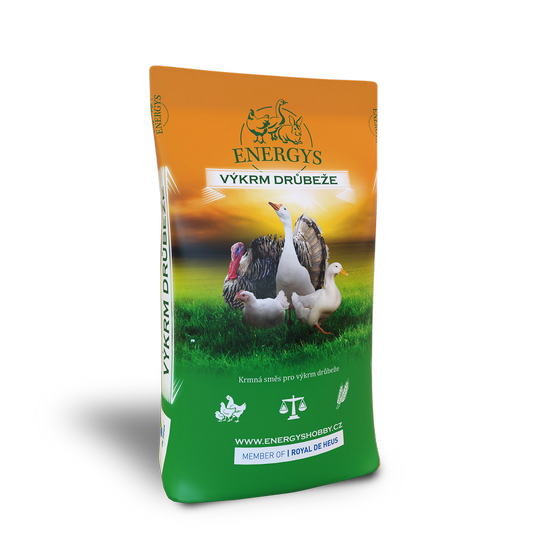
DRŮBEŽ UNI 30
Sypký koncentrát pro výkrm všech kategorií drůbeže, který obsahuje sóju nejvyšší kvality. Míchá se s obilím v poměru 20 – 40 % (dle druhu nebo fáze výkrmu). Přispívá k rychlému růstu a vysoké zmasilosti. Neobsahuje kokcidiostatikum. Lze použít také pro krmení slepic.
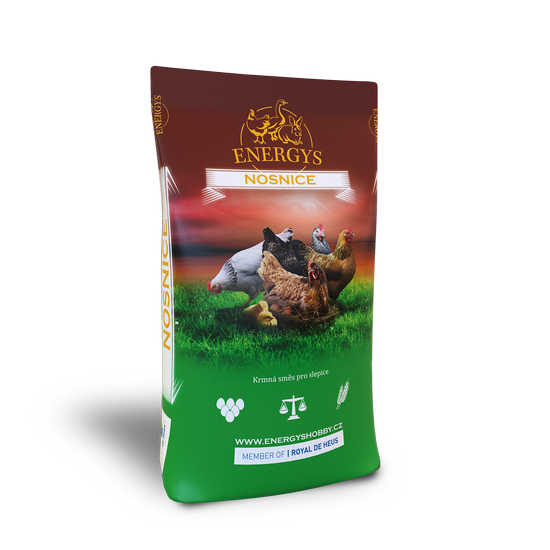
NOSNICE REPRO
Granulované krmivo pro plemenné nosnice. Podporuje vyšší líhnivost a zdárný vývoj embrya. Lze použít i pro ostatní kategorie drůbeže. Doporučuje se zkrmovat 1 – 2 měsíce před očekávanou snáškou.
NOSNICE GOLD
Granulované krmivo pro nosnice ve snášce. Podpora vysoké snášky vajec s pevnou skořápkou a krásnou barvou žloutku. Obohaceno o komplex přírodních látek, který působí proti čmelíkovi kuřímu, podporuje detoxikaci, zdraví jater a prevenci střevních parazitů. Navazuje po zkrmování směsi Kuře MIDI. Krmivo podávejte celoročně pro dlouhodobou ochranu.
NOSNICE KLASIK
Sypká krmná směs určená pro nosnice ve snášce. Svoji hrubě šrotovanou strukturou přispívá k maximální užitkovosti.
KUŘE MIDI
Od 5. týdne do konce 20. týdne stáří kuřic. Navazuje na zkrmování směsi Kuře MINI. Svým složením napomáhá ke správnému rozvoji organismu a k budoucí vysoké užitkovosti. Neobsahuje kokcidiostatikum. Vyrábí se ve dvojí formě, granulované a sypké.
KUŘE MINI
Drcená krmná směs bez kokcidiostatik. Vhodná pro odchov kuřic nosného typu do konce 4. týdne věku. Obsahuje vyvážený poměr živin podporující správný vývoj kuřat. Pro odchov kuřat je následující směsí KUŘE MIDI.