Domestic turkey
From the viewpoint of zoological taxonomy, turkeys are in the class birds (Aves), the order Galliformes, the family Phasianidae and the genus Meleagris.
Preparing a building for turkey breeding
If a breeder wants to start breeding turkeys in a building where poultry have not been bred before, the preparations of the building will consist of spraying the walls and floors against external parasites, washing the walls and preparing the feeding troughs and water supply. An artificial hatcher is fixed over a round area enclosed with plastic sheets to ensure the necessary temperature. The external areas around the building are secured against entry by rodents. It is a good idea to place a mat with a disinfectant solution in front of the entry to the building, which a breeder will appreciate if there is an avian flu outbreak. We are talking about a building in general, because a building could be for the breeding and raising of 10 to 15 turkeys, other conditions will have to be created in the event of the rearing of 50 or more turkeys up to slaughter weight. In such case it will be necessary to arrange the basic technology. Putting in wiring, a water supply, ventilation.
Litter
We place litter in the circle (circles). When turkeys are being raised, we ensure that it is permanently dry. Litter from softwood shavings has proved to be good. Dry straw is also good. The height of the litter should be 8–10 cm throughout the hall.
Temperature
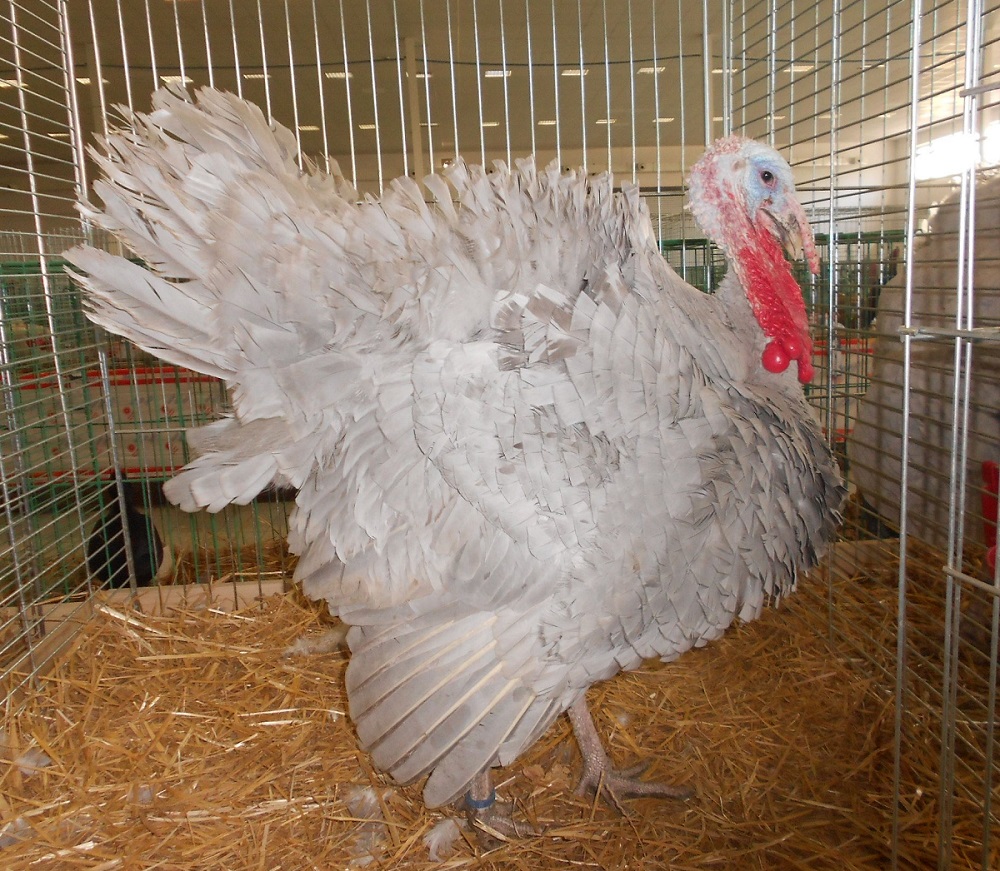
For one-day turkeys we ensure that the temperature under the hatcher is 35–36 oC. If turkeys start to be raised in the cooler parts of the year, in the early spring, it will also be necessary to set the temperature in the area around the hall to 21–25 oC. We will reduce the temperature under the hatcher every week by 3 oC, so at the age of seven weeks the turkeys will have a temperature under the hatcher or in the building of 18 oC.
At this age in good weather we ventilate and in the event that the building is linked to a grassy run we can let the turkeys into the run for a short time.
In order to be clear, we are talking about small-scale breeding during which the breeder tries to create the maximum comfort for the turkeys.
If a breeder acquires seven-week turkey broilers from a farm, raising is significantly simpler. It is necessary to arrange everything we have described until now, but the temperature in the room will be 18 oC, up to the age of 12 weeks. At this age it is possible to release turkeys into a run linked to the rearing house. Keep making sure that the turkeys do not get wet in the morning dew or the rain.
Feeding turkeys
At the start it is possible to recommend a full-value feed mix. Producers offer mixes for the relevant age categories.
Turkeys can be fed with wheat, corn, barley, oats, millet and other feed of vegetable origin. Green feed used includes nettles, chickweed, lettuce, dandelions, etc. Thoroughbred breeders also use grazing on grass and other plants. Here turkeys find an animal element in the form of various insects.
Clean drinking water has to be available all the time.
A breeder that is primarily interested in low-fat turkey meat acquires turkeys from large-scale breeding operations, most frequently broad-breasted white turkeys.
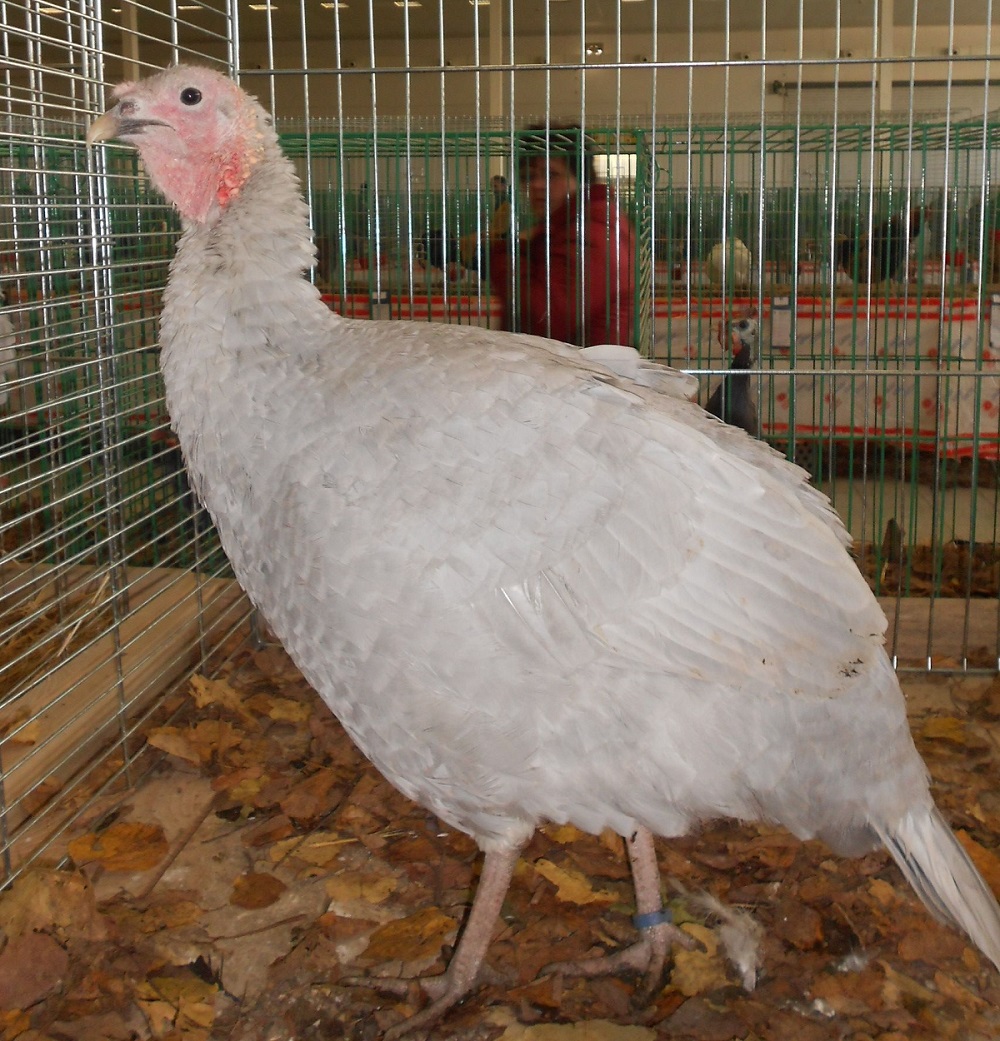
Breeding farms offer white turkey broilers that have fast-growing abilities and a high slaughter yield. It takes 5-6 months to feed a male turkey up, they reach a weight of 25 kg, the conversion is about 3 kg feed/1 kg of increase in live weight. It takes 4-5months to feed a female turkey up, they reach a weight of 13-15 kg, the feed conversion is about 3 kg/1 kg increase in live weight. When we are talking about feed, feeding with full-value feed mixes is advised. Turkeys are sold at an age of seven weeks. Interested parties can buy them sorted by sex or unsorted, or only male turkeys.
At an age of seven weeks interested parties can also buy BIG 6 broiler turkeys. The BIG 6 hybrid turkey is the result of long-term breeding work, focused on making use of the growth potential of turkeys.
The orientation consumption of feed when raising bronze turkeys is 25 kg (up to the 24th week), in the case of broad-breasted 30 kg (Prombergerová, I., Brázda, s.r.o., 2012, Prague).
Raising of young turkeys
When raising young turkeys it is necessary to ensure that, in particular at a young age, they do not get wet, but we recommend preventing this throughout the time they are raised.
Broad-breasted farm turkeys are kept in internal breeding rooms up to the age of seven weeks, turkeys hatched and raised under a hatcher can go into an outdoor run when the weather is appropriate. The turkey hen will take care of them.
How do they bear winter?
In contrast to chicks, which are sensitive up to the age of six weeks, adult turkeys are markedly resistant and bear the Central European winter well. It is important for it to be dry in the turkey house and the number of adult turkeys per square meter should be one, but no more than two. In the event that a breeder has a breeding or higher-level flock, the turkey house should be insulated, because the adult turkeys could start laying in the early spring and, in the case of morning frost, the eggs could freeze or it would be unsuitable for hatching.
BREEDING OF THOROUGHBRED DOMESTIC TURKEYS
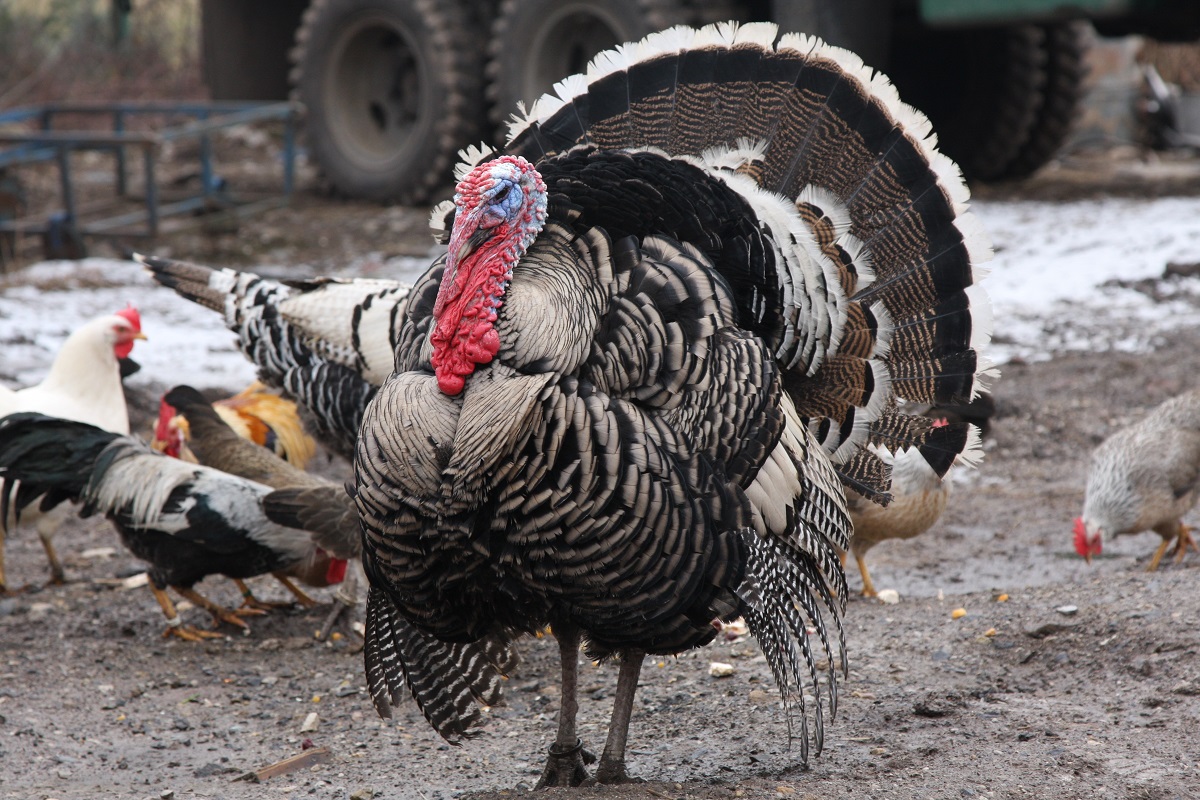
If a person has higher aims and wants to enjoy the beauty of the largest domestic poultry, he can opt for a thoroughbred breed. His aim will be to continue to breed and improve turkeys, to spread them among other interested parties and, naturally, to exhibit them at exhibitions of small farm animals.
There are marked differences between male and female turkeys in terms of the shape of the head and the size of the body, where male turkeys are 1.5 to 2 times larger than female turkeys. There is very little shape variability of turkey characteristics among turkey breeds, and in terms of plumage there are no feather or other differences as is the case with chickens and pigeons. They are sexually mature at the age of 12 months. They start to lay eggs in the early spring. The hatching of baby turkeys is natural under a sitting turkey hen. The incubation time is 28 days.
We would like to present to interested parties some of the most frequently-raised breeds here. Slovakia does not have its own breed of turkeys. At Slovak exhibitions we can see German bronze, German black, German Gröllwitz, German copper, German Narragansett, Czech grey wild with a white fringe, and Narragansett (American) turkeys.
There are only three recognised breeding flocks for 2020, one each for American Narragansett, Czech wild with a white fringe and German Gröllwitz.
BRONZE TURKEYS
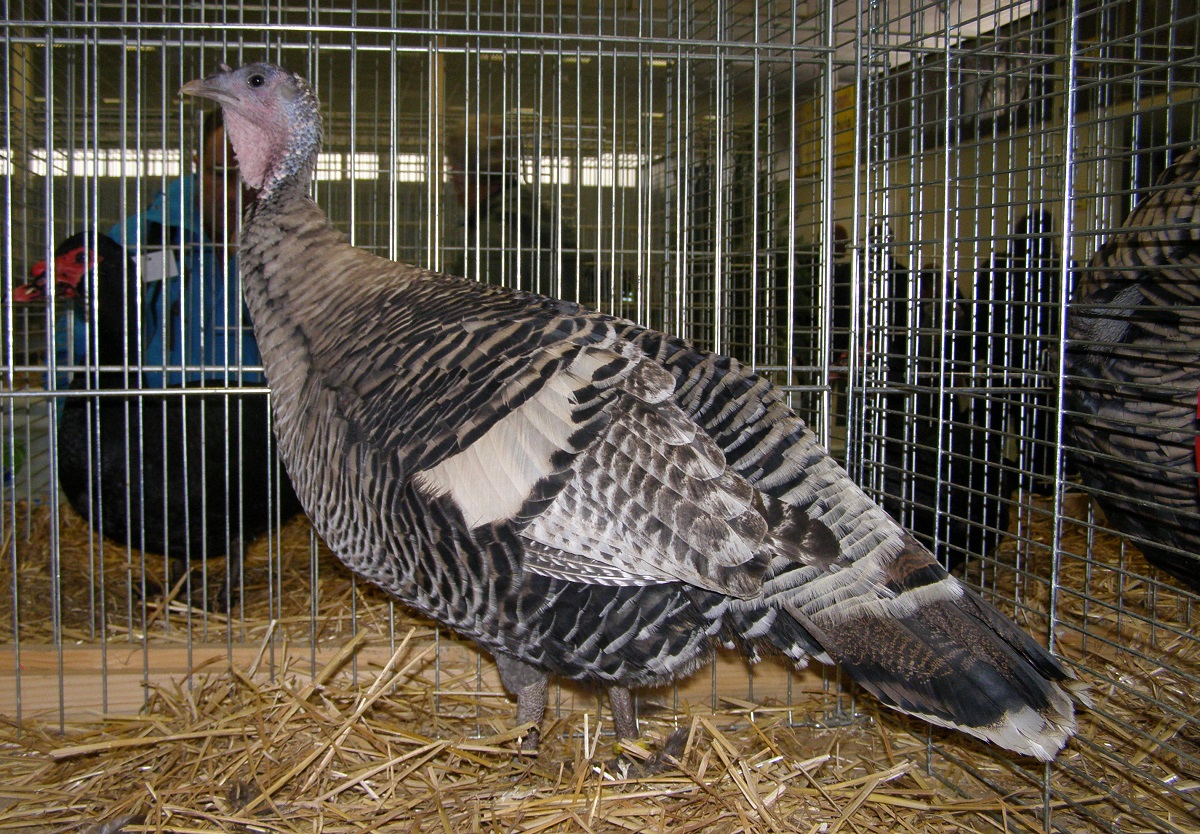
A heavy type of turkey with a large body type. Its body is long, it has a pear-shaped torso with good musculature that is carried in an upright position.
An old American breed of turkey that was the first to be purposely bred and retained the most characteristics of its wild forefather, but its weight and size were increased, the shine of its feathers and the intensity of its colouring were decreased. It spread from America to all continents.
It lays around 60 eggs with a weight of 80 g, the shell is a creamy brown with dark spots. Fertility is retained in full, they are the best brood hens.
Weight: male 12-16 kg, female 8-9 kg. They are marked with 27 mm rings for males and 24 mm rings for females.
NARRAGANSETT TURKEYS
An old, heavy breed of turkeys that was developed in America. They stand out thanks to their fast growth, the good meatiness of their thighs and breast. They are demanding in terms of the quantity and quality of feed. The eggs have a creamy brown shell with dark brown blotches. The eggs weigh at least 70 g. Weight: male 12-17 kg, female 9-10 kg. They are marked with 27 mm rings for males and 24 mm rings for females.
CZECH TURKEYS
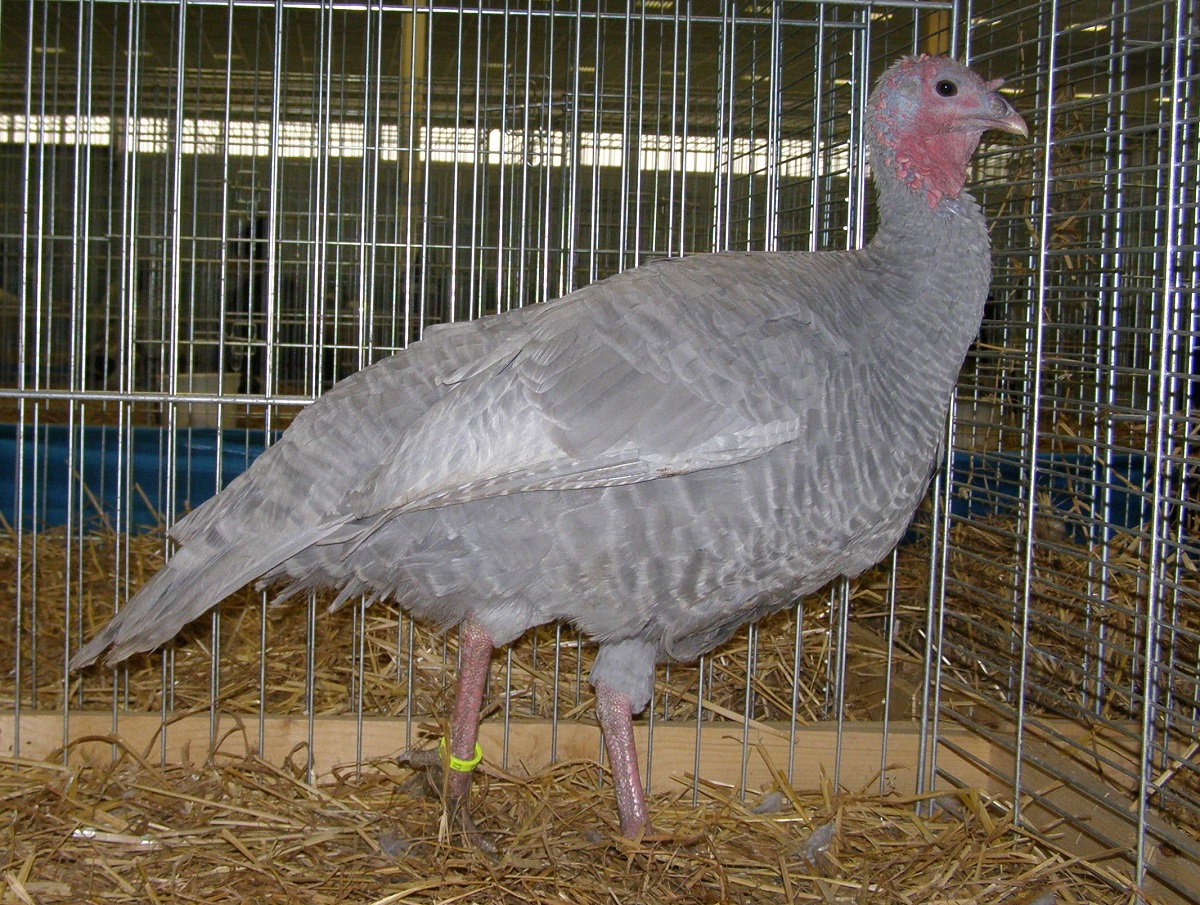
They have been reared in Bohemia and Moravia for a long time, they are suitable for small-scale breeders. Excellent hardiness, relatively fast growth, they make good use of pasture.
They usually lay 20-40 eggs in two cycles. The shell is a creamy brown with brown
patches. The eggs weigh 70 g. Fertility is retained for most turkeys.
Weight of young male turkeys 9-11 kg, max. 12, min. 8.0 kg, female turkeys – 5-6 kg, max. 7.0 kg, min. 4 kg. Old male turkeys 11-14 kg, max. 15 kg, min. 10 kg, female turkeys 5.5-7.0 kg, max. 8 kg, min. 5 kg. Male turkeys are ringed with 27 mm rings, female turkeys with 24 mm rings.
They are bred with a wild white-fringe colouring (bronze-white fringe) and grey wild white-fringe colouring.
Frequently Asked Questions
-
How to raise Bronze turkeys in domestic conditions?
The Bronze turkey is a hardy and relatively undemanding breed, suitable even for smaller farms. More information can be found in the text above.
Basic requirements:
- A dry, well-ventilated coop without drafts
- Bedding (straw, wood shavings) – change regularly
- Outdoor run – ideally grassy, as they like grazing on greenery
- Protection from rain and moisture (dampness causes health problems)
- Perches at a height of approximately 50–80 cm
- Separation of young birds from adults during the first weeks
Turkeys are more sensitive than chickens, especially when young (turkey poults), so it is important to ensure:
- Temperature of 30–35 °C during the first weeks (gradually reduce)
- Clean water and high-quality feed such as Turkey Mini Forte, followed only by feed intended for turkeys. Feeding other poultry feed may cause death because different coccidiostats are used in them.
- Preventive vitamin supplements
-
What feed is suitable for Bronze turkeys?
Feed differs according to age:
Turkey poults (0–4 weeks)
- Turkey starter feed (26–28% protein) – Turkey Mini Forte
- Finely chopped green forage
- Constant access to clean water
Growing turkeys (5–12 weeks)
- Growth feed mix (20–24% protein) – Turkey Midi Forte
- Green feed, nettles, grass
Adult turkeys
- Pelleted feed – Turkey Maxi
- Mineral supplements (calcium, grit)
- Grazing significantly reduces feeding costs
Bronze turkeys make very good use of pasture.
-
How long does it take to raise a Bronze turkey for slaughter?
It depends on the production system:
- Intensive fattening: 20–24 weeks (approx. 5–6 months)
- Traditional home raising: 6–8 months
Slower fattening = higher-quality and tastier meat.
-
Can a Bronze tom turkey be bred with a white turkey hen?
Yes, it is possible.
The offspring will be crossbreeds that:
- May have varied coloring (black, speckled, dark)
- Often show very good growth
- May not meet purebred standards
If you want to preserve the breed, mate only Bronze × Bronze. For utility farming, crossbreeding is common and problem-free.
-
What are the space requirements for raising Bronze turkeys?
Turkeys need more space than chickens.
Minimum requirements:
- In the coop: 1 m² per 1 adult turkey
- In the outdoor run: 10–20 m² per bird (the more, the better)
Important:
- High fencing (they can fly!)
- Shade in the run
- A dry resting area
Turkeys are calm birds, but they need space — in cramped conditions they are more prone to stress and disease.
Související články
5. srpna 2026
Zveřejnil: Ing. Lucie Humeni
Drůbež patří mezi hospodářská zvířata s velmi intenzivním metabolismem (látkovou přeměnou), který je základem její vysoké užitkovosti. Rychlý růst brojlerů, vysoká produkce vajec u nosnic, nebo dobrá reprodukční schopnost chovných zvířat, jsou výsledkem dlouhodobého šlechtění, kvalitní výživy a správného managementu chovu. Současně však tato vysoká výkonnost znamená, že organismus pracuje s vysokými nároky na energii,…
27. května 2026
Zveřejnil: Ing. Lucie Humeni
V praxi malochovů se pojmem grit označuje nerozpustný minerální materiál, který drůbež přijímá za účelem mechanického zpracování krmiva v trávicím traktu. Jde tedy o fyzikálně působící složku, která napomáhá trávení. Typicky se jedná o drobné kamínky (často křemičitý štěrk). Na druhé straně tu máme vápenec (uhličitan vápenatý), který však plní i nutriční funkci, protože je…
2. března 2026
Zveřejnil: Ing. Lucie Humeni
Naklíčené obiloviny jsou jednoduchým způsobem, jak obohatit krmnou dávku především u drůbeže. Díky procesu klíčení se zvyšuje stravitelnost živin a zlepšuje jejich využitelnost. Nejde však o náhradu kompletní krmné směsi, ale o vhodný doplněk při správném a hygienickém použití.
19. února 2026
Zveřejnil: Ing. Lucie Humeni
V drobnochovech hospodářských zvířat se často pracuje s menšími objemy krmných směsí. Není proto výjimkou, že chovateli zůstane část granulí nebo sypké směsi i po datu (expirace) minimální trvanlivosti. Lze takové krmivo ještě dále zkrmovat?
5. prosince 2025
Zveřejnil: Ing. Lucie Humeni
Dodržování doporučeného dávkování krmných směsí je zásadní pro zdraví a užitkovost zvířat. V textu níže stručně vysvětluji, proč se nevyplácí směsi ředit obilovinami a jaké následky může mít nesprávné krmení v drobnochovech.
Související produkty
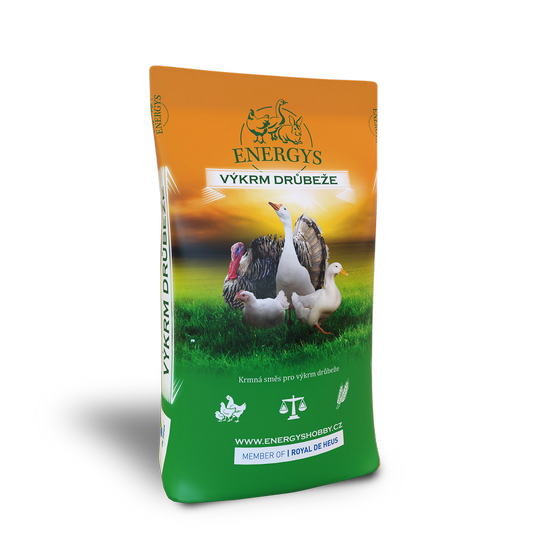
DRŮBEŽ UNI 30
Sypký koncentrát pro výkrm všech kategorií drůbeže, který obsahuje sóju nejvyšší kvality. Míchá se s obilím v poměru 20 – 40 % (dle druhu nebo fáze výkrmu). Přispívá k rychlému růstu a vysoké zmasilosti. Neobsahuje kokcidiostatikum. Lze použít také pro krmení slepic.
BROJLER MAXI
Krmivo pro závěrečnou fázi výkrmu brojlerů. Podpora vysoké zmasilosti a delikátní chuti masa. Začněte používat 5 či více dnů před porážkou. Neobsahuje kokcidiostatika.
BROJLER MIDI FORTE
Granulovaná krmná směs pro intenzivní výkrm brojlerů od 15. dne věku do min. 5 dnů před ukončením výkrmu. Obsažená kokcidiostatika snižují mortalitu v průběhu výkrmu. Pro další fázi výkrmu je vhodná směs Brojler MAXI.
BROJLER MINI FORTE
Drcená krmná směs s kokcidiostatikem, pro intenzivní výkrm brojlerových kuřat do 14. dne stáří a podporu rychlého růstu a výborného zdravotního stavu Vašich brojlerů.
KACHNA MAXI
Granulovaná směs pro výkrm kachen a hus od 3. týdne stáří do porážky. Obsažené živiny podporují rychlý růst, vysokou zmasilost a delikátní chuť masa.
KACHNA MINI
Kvalitní drcená směs pro výkrm kachen a hus do 2. týdnů stáří. Je vhodná pro rychlý růst a vysokou zmasilost.
KRŮTA MAXI
Krmivo pro závěrečnou fázi výkrmu krůt. Používejte od 13. týdne stáří. Neobsahuje kokcidiostatikum.
KRŮTA MIDI FORTE
Kvalitní granulované krmivo s kokcidiostatiky pro výkrm krůt od 5. do 12. týdne věku. Je základem pro rychlý růst, vysokou zmasilost a výborný zdravotní stav Vašich krůt. Obsah kokcidiostatik snižuje mortalitu v průběhu výkrmu. Navazuje po zkrmení směsi Krůta Mini Forte. Živá hmotnost na konci tohoto období by měla být u krůt asi 7 kg a u krocanů 10 kg.
KRŮTA MINI FORTE
Drcená směs s kokcidiostatiky pro výkrm krůt do stáří 4 týdnů. Je základem pro vysokou zmasilost. Následně použijte směs Krůta Midi Forte.