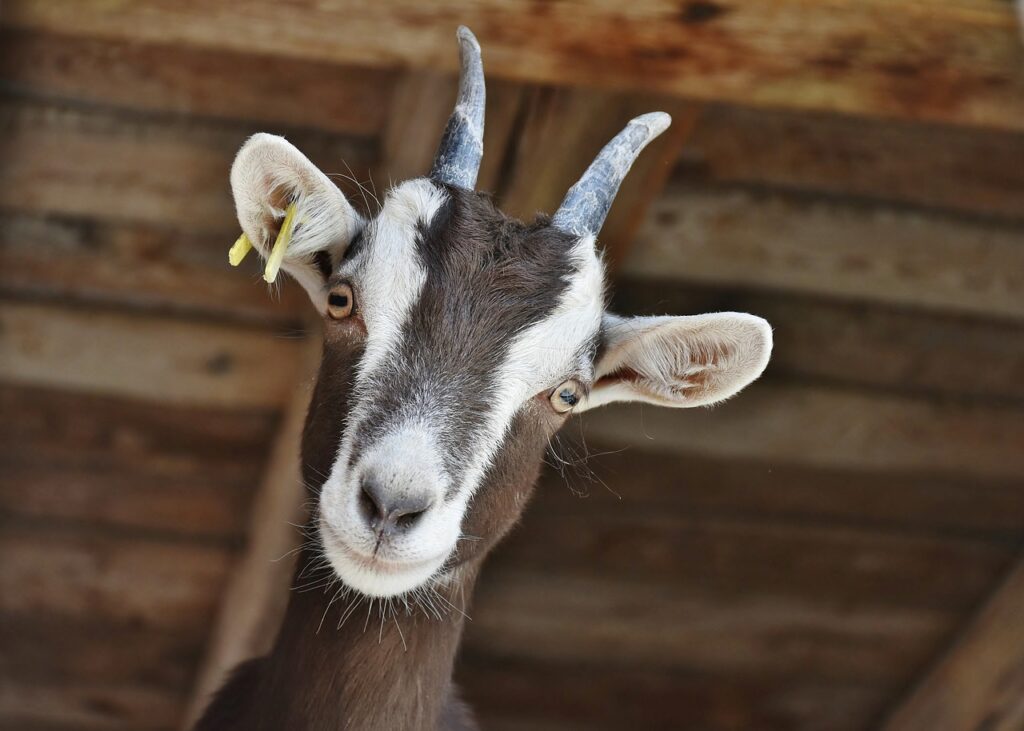
Breeds of goat kept in the Czech Republic
While goats are widely recognized around the world, this species of livestock remains undervalued in the Czech Republic. According to data from the Sheep and Goat Breeders Association, more than six thousand animals were included in performance testing in 2018, specifically 6,093 goats representing ten breeds.
Goat breeds represented in the Czech Republic
The largest share is represented by the national breeds – the White Shorthaired Goat (2,570 animals) and the Brown Shorthaired Goat (1,272 animals). The remaining population consists of Anglo-Nubian goats (566), Saanen goats (660), Alpine goats (39), Valais Blackneck goats (18), Boer goats (226), Cashmere goats (14), Angora goats (42), and Dutch Dwarf goats (56). However, the total goat population raised in the country is estimated to be about two and a half times higher.
With regard to production type, Czech herds include dairy breeds (White and Brown Shorthaired, Anglo-Nubian, Alpine, and Saanen), meat breeds (Boer), dual-purpose breeds (Valais Blackneck), fiber breeds (Cashmere and Angora), and dwarf breeds (Dutch Dwarf Goat).
Characteristics of Goat Breeds
White Shorthaired Goat
The White Shorthaired Goat was developed in Bohemia during the first half of the 20th century through crossbreeding local goat types with imported Saanen bucks from Switzerland and Germany. It is a calm breed with a medium to large rectangular body frame, strong constitution, and medium-length straight legs. Adult does reach a withers height of 70–80 cm and weigh 50–60 kg, while bucks measure 75–85 cm and can weigh up to 90 kg.
This national breed, kept both horned and polled, is popular among breeders for its high fertility and excellent milk production. Does produce on average 700–1 100 kg of milk with 3.4–3.7 % fat and 2.8–3.1 % protein. Since 1992, the breed has been listed as an animal genetic resource.
Brown Shorthaired Goat
The Brown Shorthaired Goat was developed by crossbreeding local spotted and brown goats with imported Harz bucks from Germany. The breed, which can be horned or polled, has a calm temperament, a medium rectangular body frame, strong constitution, and medium-length straight legs. Adult does measure 60–70 cm at the withers, bucks 70–80 cm, with body weights of 50–55 kg and 70–85 kg respectively. The breed is characterized by high fertility and excellent milk production. Dairy does produce on average 700–1 100 kg of milk with 3.4–3.7 % fat and 2.9–3.2 % protein. Since 1992, the breed has also been listed as an animal genetic resource.
Anglo-Nubian Goat
The Anglo-Nubian Goat originated from crossing local English goats with oriental lop-eared breeds. It is a large-framed breed with strong constitution, long legs, a characteristic Roman nose, and broad pendulous ears. Adult bucks weigh 90–110 kg, while does weigh 60–80 kg. Withers height ranges from 80–90 cm in does and 90–110 cm in bucks. The breed is highly fertile and known for excellent milk production. Does produce on average 1 200–1 500 kg of milk with high fat content (4.7 %) and protein content (3.9 %).
Saanen Goat
The Saanen Goat originates from the Bern region of Switzerland. It is a calm breed with a larger rectangular body frame, strong constitution, and medium-length straight legs. Saanen goats may be horned or polled. Adult does reach 75–85 cm at the withers and weigh 55–75 kg, while bucks reach 90–100 cm and weigh 80–100 kg.The breed is known for high fertility and excellent milk yield. Dairy does produce on average 1 100–1 300 kg of milk with 3.4–3.7 % fat and 3.1–3.3 % protein.
Alpine Goat
The Alpine Goat is a French breed of medium body size developed through crossbreeding local goats with brown breeds. As a result, it occurs in several color varieties, most commonly chamois-colored with a black dorsal stripe. Adult does reach 70–90 cm at the withers and weigh 50–80 kg, while bucks measure 90–100 cm and weigh 80–100 kg. The breed is highly fertile and provides good milk production. Dairy does produce on average 700–800 kg of milk (record: 2 400 kg) with 3.3 % fat and 3.5 % protein.
Boer Goat
The Boer Goat was developed in South Africa during the 1940s by crossing local goats with Bantu, Cashmere, and several European and Indian breeds. It is a large-framed breed with excellent muscling and strong constitution. Adult does measure 50–60 cm at the withers, bucks 70–80 cm. Does weigh 55–75 kg, while bucks weigh 90–130 kg. Boer goats are a horned meat breed with very good milk production and fertility.
Valais Blackneck Goat
The Valais Blackneck Goat was developed in the Swiss canton of Valais under the harsh conditions of the Bernese, Ticino, and Valais Alps. Hardiness and low maintenance requirements are the main advantages of this attractive dual-purpose long-haired horned breed with very good milk and meat performance, making it suitable for extensive farming systems. A characteristic feature is its long coat, black on the front half of the body and white on the rear half. It is a large-framed breed with good muscling and strong constitution. Adult does reach 70–75 cm at the withers and weigh 50–55 kg, while bucks measure 75–85 cm and weigh 65–75 kg.
Angora Goat
The Angora Goat originated in Asia Minor (Turkey). Its distinctive fleece, about 30 cm long, covers the entire body including the belly and legs, with a tuft on the forehead. The fleece contains minimal grease. The fiber composition consists of 80% intermediate fibers, 18% undercoat, and 2% guard hairs (dead fibers). The fleece has high crimp and exceptional luster, with a fiber diameter of C-D/E (30–45 µm). It is a small-framed breed with good muscling and strong constitution. Adult does reach 30–45 cm at the withers and weigh 30–35 kg, while bucks measure 50–60 cm and weigh 40–45 kg.
Cashmere Goat
The Cashmere Goat was developed in Central Asia. Its fleece is dense and made up of intermediate fibers with a fineness of 35–50 µm, while the cashmere undercoat has a fineness of 7–20 µm. It is a smaller-framed breed with good muscling and strong constitution. Adult does reach 55–60 cm at the withers and weigh 35–45 kg, while bucks measure 60–70 cm and weigh 55–60 kg.
Dutch Dwarf Goat
The Dutch Dwarf Goat was developed in the Netherlands during the second half of the 20th century. It is a horned breed with a calm temperament, small rectangular body frame, strong constitution, and short straight legs. Adult does reach 40–50 cm at the withers and weigh up to 25 kg, while bucks measure 50–60 cm and weigh up to 40 kg.
Frequently Asked Questions
-
How often should goats be vaccinated and dewormed?
It is recommended to carry out fecal examinations regularly (ideally twice a year) and deworm based on the results. Targeted, parasite-guided deworming is preferable to automatic annual treatment. Vaccination schedules depend on the region and health situation, but annual vaccination may be appropriate.
-
Can the smell and taste of milk be influenced?
Good hygiene and high-quality pasture are essential. Herbs in the pasture and sufficient water intake can also positively affect milk flavor and aroma.
-
How are kids weaned?
Kids should ideally be weaned gradually between 6 and 8 weeks of age (or up to 3 months), once they weigh at least 10–15 kg and are consuming solid feed.
-
At what age and during which season should goats be bred?
Does can be bred at 8–10 months of age if they have reached at least 35–40 kg body weight, depending on the breed. The main breeding season runs from August to December, when goats naturally come into heat.
-
What can be used against lice?
Treatment should always be recommended by a veterinarian, taking into account approved products for goats. Both the animals and their environment should ideally be treated. The most effective products contain synthetic pyrethroids (e.g., deltamethrin) or macrocyclic lactones (e.g., eprinomectin), following veterinary consultation.
Související články
2. března 2026
Zveřejnil: Ing. Lucie Humeni
Naklíčené obiloviny jsou jednoduchým způsobem, jak obohatit krmnou dávku především u drůbeže. Díky procesu klíčení se zvyšuje stravitelnost živin a zlepšuje jejich využitelnost. Nejde však o náhradu kompletní krmné směsi, ale o vhodný doplněk při správném a hygienickém použití.
19. února 2026
Zveřejnil: Ing. Lucie Humeni
V drobnochovech hospodářských zvířat se často pracuje s menšími objemy krmných směsí. Není proto výjimkou, že chovateli zůstane část granulí nebo sypké směsi i po datu (expirace) minimální trvanlivosti. Lze takové krmivo ještě dále zkrmovat?
30. dubna 2020
Zveřejnil: Tým Energys Hobby
Cápové ovce svým vzezřením připomínají antilopu s vlnou. Rohy jsou výjimečné také u ovcí plemene jakob. A vůbec nejmenším u nás chovaným plemenem je ouessantská ovce.
19. března 2020
Zveřejnil: Tým Energys Hobby
V tomto článku se podíváme na Romanovské ovce, které se původně chovaly zejména pro produkci kvalitní kožešnické suroviny. Dále dojné plemeno lacaune a shetlandské ovce.
18. února 2020
Zveřejnil: Tým Energys Hobby
Z plemen s masnou užitkovostí se v České republice chovají berrichone du Cher, bleu du Maine, charollais, dorper, hampshire, německá černohlavá ovce, oxford down, suffolk a texel. Nejpočetněji je zastoupené plemeno suffolk, taxel a charollais.
Související produkty
OVCE UNI
Doplňková krmná směs pro odchov a výkrm ovcí a koz, lze použít také pro lamy. Krmivo je melasované a vhodné i pro březí a laktující zvířata. Obsažené látky podporují jejich výborný zdravotní stav a požadované chovatelské výsledky.
JEHNĚ
Startér pro jehňata a kůzlata vhodný od prvního týdne do 3. měsíce věku. Nejprve se přikrmuje k mléku, později se kombinuje se senem. Podporuje rozvoj bachoru, růst kostí i svalstva.