Ostrich farming
The farming of the double-fingered ostrich for the production of feathers, skin meat and eggs began in the mid-19th century in africa. Commercial breeding of the largest flightless bird on the planet began in the 1990s.
Feeding ostriches
On farms, the birds are housed in airy barns with an adjoining grass run. Pasture is the basis of the ostrich diet from about the end of april until mid-november. As grazing forage declines, the birds are given alfalfa grass hay, supplemented with a vitamin-mineral premix.
The feed ration also includes, of course, kernels, or grain (wheat and barley) at a daily rate of half to one kilogram per bird, with which, especially after a long winter, farmers compensate for the birds‘ energy deficit. In january, they start adding oats and pelleted feed to the ostriches to support laying. From mid-april onwards, green fodder (alfalfa grass) appears in the ration. The feed, together with the lengthening of the day, will kick-start laying during february and march.
Raising ostriches on farms
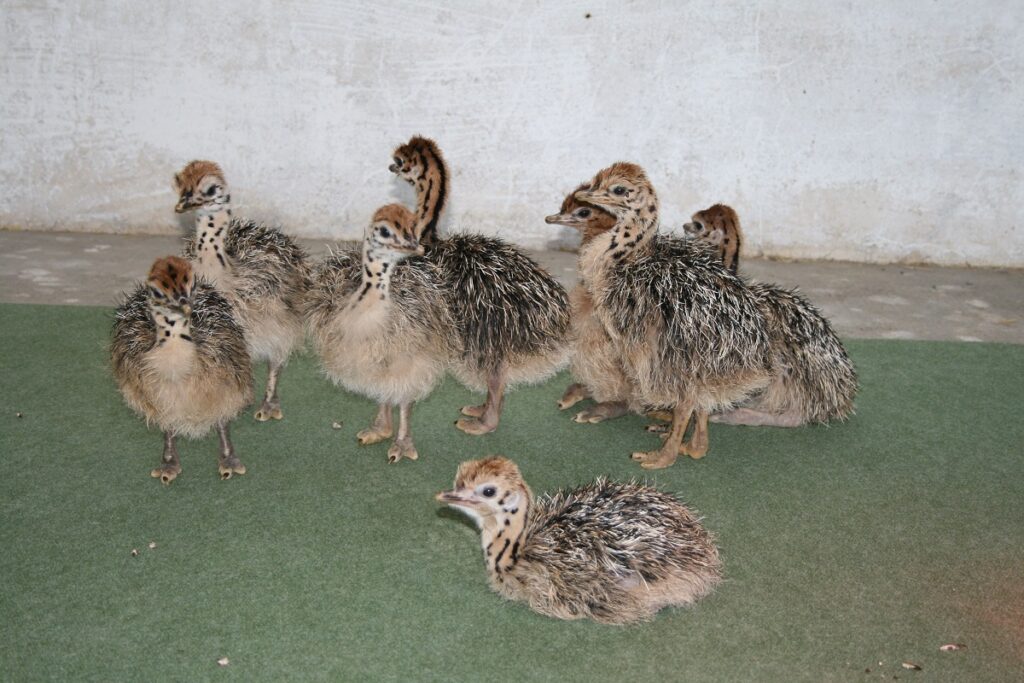
Ostriches lay an average of 30 to 40 eggs, with bred lines laying 80 to 120 eggs. The eggs are placed in hatching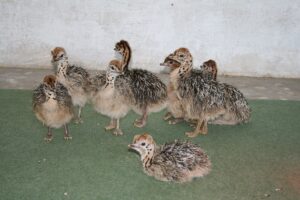 boxes where they are incubated at 36,3 °c for six weeks. A similar temperature should be maintained for the ostriches during their first days in the nursery.
The hatched ostriches are initially kept in the nursery under an infralamp and on heated mats. Feeding begins after the yolk sac is digested, which is about the fourth or fifth day after incubation. From the age of three months, the chicks are on pasture, where they have a complete feed mixture in addition to the green feed. At night they are confined to a mobile air stable. From the age of six months, the birds can tolerate temperature drops below freezing without any problems.
Ostriches reach sexual maturity at two to three years, with roosters maturing later. Ostriches destined for slaughter end their life journey at about one year of age. A 100 kg ostrich yields approximately 30 kg of meat; the so-called commercial meat comes exclusively from the thighs, while the meat from the other parts of the body is used to make sausages.
In addition to the meat, the skin can also be recovered and used,
For example, to make luxury shoes, handbags, bags, clothing, wallets and other accessories. Ostrich feathers are also of interest as fashion accessories. The shells are used either whole for making lamps, cups, etc., or as fragments in the form of decorative items. Ostrich fat is used to make original natural cosmetics.
Související články
11. května 2026
Zveřejnil: Tým Energys Hobby
Jsme rádi, že s Vámi můžeme sdílet život jednoho nizozemského páru, který hospodaří ve Slovinsku, s firmou De Heus spolupracuje a své pštrosy krmí granulemi značky Energys Hobby.
19. února 2026
Zveřejnil: Ing. Lucie Humeni
V drobnochovech hospodářských zvířat se často pracuje s menšími objemy krmných směsí. Není proto výjimkou, že chovateli zůstane část granulí nebo sypké směsi i po datu (expirace) minimální trvanlivosti. Lze takové krmivo ještě dále zkrmovat?
6. dubna 2022
S farmovým chovem pštrosa dvouprstého za účelem produkce peří, kůže masa a vajec se začalo v polovině 19. století v Africe. U nás se s komerčním chovem tohoto největšího nelétavého ptáka na planetě začalo v devadesátých letech minulého století.
21. srpna 2019
Zveřejnil: Tým Energys Hobby
Africký pštros byl zdomácněn ve druhé polovině minulého století v Jižní Africe. Od roku 1993 se domestikovaní pštrosi chovají pro maso, kůži a peří také na českých farmách. Jak probíhá snáška a líhnutí? A jaké jsou nejčastější problémy u pštrosů?
15. srpna 2019
Zveřejnil: Tým Energys Hobby
Ještě před pětadvaceti lety by jen málokdo uvěřil, že se u nás budou pštrosi běžně chovat jako hospodářská zvířata. Dnes už však nejsou pštrosí farmy žádnou raritou a zájem o jejich chov stále roste. Důvodem je nejen atraktivita těchto impozantních ptáků, ale také kvalitní pštrosí maso, hodnotná pštrosí vejce a další produkty. Jaké jsou možnosti…
Související produkty
PŠTROS UNI
Doplňková krmná směs pro plemenné pštrosy v období snáškového klidu. Ke směsi se přikrmují obiloviny a objemná krmiva. Toto krmivo plně pokrývá potřebu vitamínů a minerálů.
PŠTROS REPRO
Doplňkové krmivo pro pštrosy ve snáškovém období. Ke směsi přikrmujte ještě 20 % suché píce nebo až 50 % zelené píce. Díky zvýšenému obsahu vybraných látek podporuje plodnost a vyšší líhnivost.
PŠTROS MAXI
Doplňková krmná směs pro odchov a výkrm pštrosů od 6. měsíce do doby pohlavní dospělosti, nebo do porážky. Podpora rychlého růstu, vysoké zmasilosti a výborné chuti. Ke směsi přikrmujte kvalitní bílkovinná objemná krmiva.
PŠTROS MINI
Kompletní krmivo pro počáteční fázi odchovu a výkrmu pštrosů. Používejte od vylíhnutí do 6. měsíce stáří. Po uvedeném období je vhodné pokračovat ve výkrmu směsí Pštros MAXI. Neobsahuje kokcidiostatikum.