
Why is it important to follow the recommended dosage of feed mixtures
In small-scale farming, it is common to encounter situations where breeders offer animals a smaller amount of complete feed mixture than recommended by the manufacturer, and replace the rest of the feed ration with grains such as wheat, barley, or corn. Grains certainly have their value in feeding, but on their own, they are not nutritionally complete. Moreover, if the recommended amount of mixture or other added supplements is not followed, neither the mixture nor the supplements will fulfill their purpose—whether it is providing enough nutrients that the animal needs, or the added value from other supplementary substances or medications, such as coccidiostats. In this article, we will look at how this can actually affect the animal. Diluting the mixture with grains disrupts the balance of the feed ration A complete feed mixture is balanced in terms of energy, protein, proper representation of minerals, vitamin concentration, and fiber content. When a breeder „dilutes“ the mixture with grains, the balance of the feed ration is disrupted. The animal may then suffer from hidden deficiencies, which later manifest as health problems or decreased productivity. Grains are especially rich in carbohydrates, specifically starch. By offering additional grains or other feed ingredients alongside the feed mixture, you may achieve that the animal has enough energy, but will lack other nutrients that are not present in grains. What is missing in grains? Essential amino acids (lysine, methionine)—amino acids are the basic components of proteins Vitamins A, D, K, part of the B group, vitamin E is limited Calcium and sodium, mineral trace elements (selenium, copper, zinc, …) What effects can this have on laying hens? Soft, thin, or deformed eggshells Reduced laying performance Decreased immunity Cannibalism If the mixture is underdosed, the animal does not receive the full dose of active substances Complete feed mixtures also contain other substances that affect animal health and well-being. In poultry farming, coccidiostats are very often added to feed mixtures (Broiler Mini Forte, Broiler Midi Forte, Turkey Mini Forte, Turkey Midi Forte). Furthermore, feed mixtures contain mineral-vitamin premixes, amino acids, or other functional supplements, such as substances acting against certain types of parasites (e.g., Layer Gold with Acariflash against red mites). However, these substances are only effective if the animal receives the recommended amount of feed mixture. Otherwise, the active substances are „diluted,“ resulting in underdosing. What does underdosing of substances intended to improve animal health cause? In the case of coccidiostats, coccidia are not sufficiently suppressed, resistant strains are selected, and undesirable resistance develops With Acariflash (in Layer Gold), red mites are not sufficiently suppressed, and the breeder may mistakenly evaluate the product as ineffective What else does underdosing of the feed mixture cause? Underdosing the feed mixture leads to both health and economic losses. In the end, you pay more than if you had followed the recommended daily dosage from the beginning. Underdosing causes: Weakened immunity Reduced growth Decreased egg production in layers Higher susceptibility to coccidiosis Higher risk of mortality Higher costs for subsequent treatment What is the appropriate solution if you want to use other feeds as well? If you plan for the base of the feed ration to consist of individual feed ingredients, it is better to choose a concentrate (Poultry UNI 30, Ostrich UNI) and, if necessary, add coccidiostats or other supplementary substances required for your farm separately. In conclusion, I would like to once again emphasize the importance of following the recommended dosage, as it is one of the most important factors that can affect the health and production results of animals. The complete feed mixture is formulated to meet the animal’s daily nutrient requirements. If the animal does not receive the recommended amount, it simply will not get what it needs.
In small-scale farming, it is common to encounter situations where breeders offer animals a smaller amount of complete feed mixture than recommended by the manufacturer, and replace the rest of the feed ration with grains such as wheat, barley, or corn. Grains certainly have their value in feeding, but on their own, they are not nutritionally complete. Moreover, if the recommended amount of mixture or other added supplements is not followed, neither the mixture nor the supplements will fulfill their purpose—whether it is providing enough nutrients that the animal needs, or the added value from other supplementary substances or medications, such as coccidiostats. In this article, we will look at how this can actually affect the animal.
Diluting the mixture with grains disrupts the balance of the feed ration
A complete feed mixture is balanced in terms of energy, protein, proper representation of minerals, vitamin concentration, and fiber content. When a breeder „dilutes“ the mixture with grains, the balance of the feed ration is disrupted. The animal may then suffer from hidden deficiencies, which later manifest as health problems or decreased productivity.
Grains are especially rich in carbohydrates, specifically starch. By offering additional grains or other feed ingredients alongside the feed mixture, you may achieve that the animal has enough energy, but will lack other nutrients that are not present in grains.
- Essential amino acids (lysine, methionine)—amino acids are the basic components of proteins
- Vitamins A, D, K, part of the B group, vitamin E is limited
- Calcium and sodium, mineral trace elements (selenium, copper, zinc, …)
- Soft, thin, or deformed eggshells
- Reduced laying performance
- Decreased immunity
- Cannibalism
If the mixture is underdosed, the animal does not receive the full dose of active substances
Complete feed mixtures also contain other substances that affect animal health and well-being. In poultry farming, coccidiostats are very often added to feed mixtures (Broiler Mini Forte, Broiler Midi Forte, Turkey Mini Forte, Turkey Midi Forte). Furthermore, feed mixtures contain mineral-vitamin premixes, amino acids, or other functional supplements, such as substances acting against certain types of parasites (e.g., Layer Gold with Acariflash against red mites). However, these substances are only effective if the animal receives the recommended amount of feed mixture. Otherwise, the active substances are „diluted,“ resulting in underdosing.
What does underdosing of substances intended to improve animal health cause?
- In the case of coccidiostats, coccidia are not sufficiently suppressed, resistant strains are selected, and undesirable resistance develops
- With Acariflash (in Layer Gold), red mites are not sufficiently suppressed, and the breeder may mistakenly evaluate the product as ineffective
What else does underdosing of the feed mixture cause?
Underdosing the feed mixture leads to both health and economic losses. In the end, you pay more than if you had followed the recommended daily dosage from the beginning.
- Weakened immunity
- Reduced growth
- Decreased egg production in layers
- Higher susceptibility to coccidiosis
- Higher risk of mortality
- Higher costs for subsequent treatment
What is the appropriate solution if you want to use other feeds as well?
If you plan for the base of the feed ration to consist of individual feed ingredients, it is better to choose a concentrate (Poultry UNI 30, Ostrich UNI) and, if necessary, add coccidiostats or other supplementary substances required for your farm separately.
In conclusion, I would like to once again emphasize the importance of following the recommended dosage, as it is one of the most important factors that can affect the health and production results of animals. The complete feed mixture is formulated to meet the animal’s daily nutrient requirements. If the animal does not receive the recommended amount, it simply will not get what it needs.
Související články
2. března 2026
Zveřejnil: Ing. Lucie Humeni
Naklíčené obiloviny jsou jednoduchým způsobem, jak obohatit krmnou dávku především u drůbeže. Díky procesu klíčení se zvyšuje stravitelnost živin a zlepšuje jejich využitelnost. Nejde však o náhradu kompletní krmné směsi, ale o vhodný doplněk při správném a hygienickém použití.
19. února 2026
Zveřejnil: Ing. Lucie Humeni
V drobnochovech hospodářských zvířat se často pracuje s menšími objemy krmných směsí. Není proto výjimkou, že chovateli zůstane část granulí nebo sypké směsi i po datu (expirace) minimální trvanlivosti. Lze takové krmivo ještě dále zkrmovat?
5. prosince 2025
Zveřejnil: Ing. Lucie Humeni
Dodržování doporučeného dávkování krmných směsí je zásadní pro zdraví a užitkovost zvířat. V textu níže stručně vysvětluji, proč se nevyplácí směsi ředit obilovinami a jaké následky může mít nesprávné krmení v drobnochovech.
16. března 2022
Zveřejnil: Tým Energys Hobby
Při výběru krmiva (nejen) pro drůbež je nezbytné vycházet z účelu chovu či z fáze výkrmu. Krmiva Energys Hobby tyto potřeby akcentuje, a tak si určitě vyberete, ať už je vaše drůbež v jakémkoliv vývojovém stádiu. Jak ale to pravé krmivo vybrat, a které je pro Vaši drůbež nejvhodnější?
9. prosince 2021
Zatímco pro odchov a výkrm běžných druhů a užitkových typů drůbeže existují technologické postupy, pro tzv. netradiční druhy drůbeže, ale i běžců s potenciálem pro komerční využití je zmiňovaných návodů poskrovnu. V tomto článku se dočtete základní informace o chovu barbarií a divokých kachen.
Související produkty
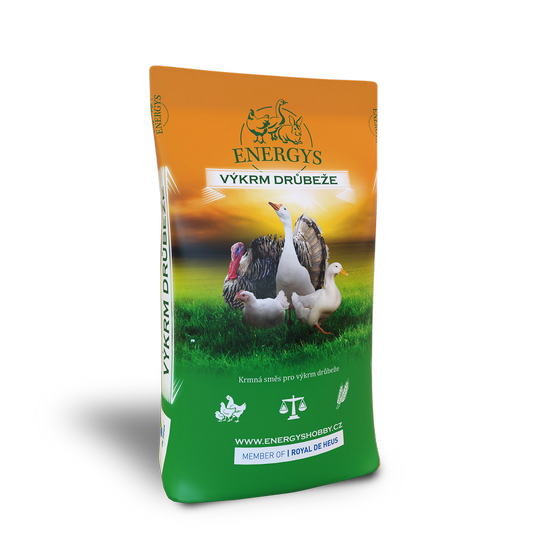
DRŮBEŽ UNI 30
Sypký koncentrát pro výkrm všech kategorií drůbeže, který obsahuje sóju nejvyšší kvality. Míchá se s obilím v poměru 20 – 40 % (dle druhu nebo fáze výkrmu). Přispívá k rychlému růstu a vysoké zmasilosti. Neobsahuje kokcidiostatikum. Lze použít také pro krmení slepic.
BROJLER MAXI
Krmivo pro závěrečnou fázi výkrmu brojlerů. Podpora vysoké zmasilosti a delikátní chuti masa. Začněte používat 5 či více dnů před porážkou. Neobsahuje kokcidiostatika.
BROJLER MIDI FORTE
Granulovaná krmná směs pro intenzivní výkrm brojlerů od 15. dne věku do min. 5 dnů před ukončením výkrmu. Obsažená kokcidiostatika snižují mortalitu v průběhu výkrmu. Pro další fázi výkrmu je vhodná směs Brojler MAXI.
BROJLER MINI FORTE
Drcená krmná směs s kokcidiostatikem, pro intenzivní výkrm brojlerových kuřat do 14. dne stáří a podporu rychlého růstu a výborného zdravotního stavu Vašich brojlerů.
KACHNA MAXI
Granulovaná směs pro výkrm kachen a hus od 3. týdne stáří do porážky. Obsažené živiny podporují rychlý růst, vysokou zmasilost a delikátní chuť masa.
KACHNA MINI
Kvalitní drcená směs pro výkrm kachen a hus do 2. týdnů stáří. Je vhodná pro rychlý růst a vysokou zmasilost.
KRŮTA MAXI
Krmivo pro závěrečnou fázi výkrmu krůt. Používejte od 13. týdne stáří. Neobsahuje kokcidiostatikum.
KRŮTA MIDI FORTE
Kvalitní granulované krmivo s kokcidiostatiky pro výkrm krůt od 5. do 12. týdne věku. Je základem pro rychlý růst, vysokou zmasilost a výborný zdravotní stav Vašich krůt. Obsah kokcidiostatik snižuje mortalitu v průběhu výkrmu. Navazuje po zkrmení směsi Krůta Mini Forte. Živá hmotnost na konci tohoto období by měla být u krůt asi 5,9 kg a u krocanů 8,9 kg.
KRŮTA MINI FORTE
Drcená směs s kokcidiostatiky pro výkrm krůt do stáří 4 týdnů. Je základem pro vysokou zmasilost. Následně použijte směs Krůta Midi Forte.