Methods of keeping chickens
The domestic chicken, or hen, is one of the most important economically utilized animals, providing benefits in the form of eggs and meat. At present, increasing emphasis is being placed on animal living conditions, the so-called welfare standards. As a result, farmers are already beginning to prepare for mandatory changes in the housing of laying hens. The following article provides a simple summary of the housing systems used.
Farm Housing Systems
Cage System
This system was developed in the second half of the last century. In the methodological guide entitled Welfare Principles and New EU Standards in Poultry Farming, published in 2004 by the Research Institute of Animal Production, a team of authors led by MVDr. Květoslav Košař evaluated individual technological systems for table egg production.
The authors state that conventional cages, in which laying hens do not come into contact with droppings, represent a highly functional technological system that minimizes not only negative factors affecting laying performance, but also the environment in the poultry house (emissions of harmful stable gases, including dust) and egg quality (physical and bacteriological contamination). The stockperson’s work mainly consists of checking the feeding and watering systems and monitoring the hens’ health. A well-designed technological system allows operation even by staff with minimal zootechnical knowledge.
However, efforts by activists and animal welfare advocates campaigning for better housing conditions resulted in a ban on cage systems for laying hens in the EU. From January 1, 2027, laying hens on farms will be kept only in aviary systems or in barns on litter, which may be combined with a covered winter garden or outdoor run.
Barn System (Deep Litter System)
Laying hens are kept in large groups in halls (with or without windows), where one third of the floor area is covered with litter (straw, wood shavings, sand). Feeding and watering are automatic, using trough or circular feeders and nipple or cup drinkers. Laying nests are group nests with automatic egg collection and are closed at night. Perches are placed above a slatted floor.
The advantage of this system is free movement, which benefits the hens’ health and condition. Allowing natural behavior also ensures natural claw wear. Providing an appropriate indoor environment is technically relatively simple. It offers good working conditions with the possibility of mechanized litter and manure removal.
However, increased dust levels, higher production of stable gases, and possible direct contact with droppings increase the risk of infectious diseases. Keeping hens in large groups does not allow stable social relationships to form, increasing the risk of aggressive behavior, which may even lead to cannibalism. This system is also demanding in terms of maintaining good litter quality throughout the laying cycle and monitoring the hens’ health.
Aviary System
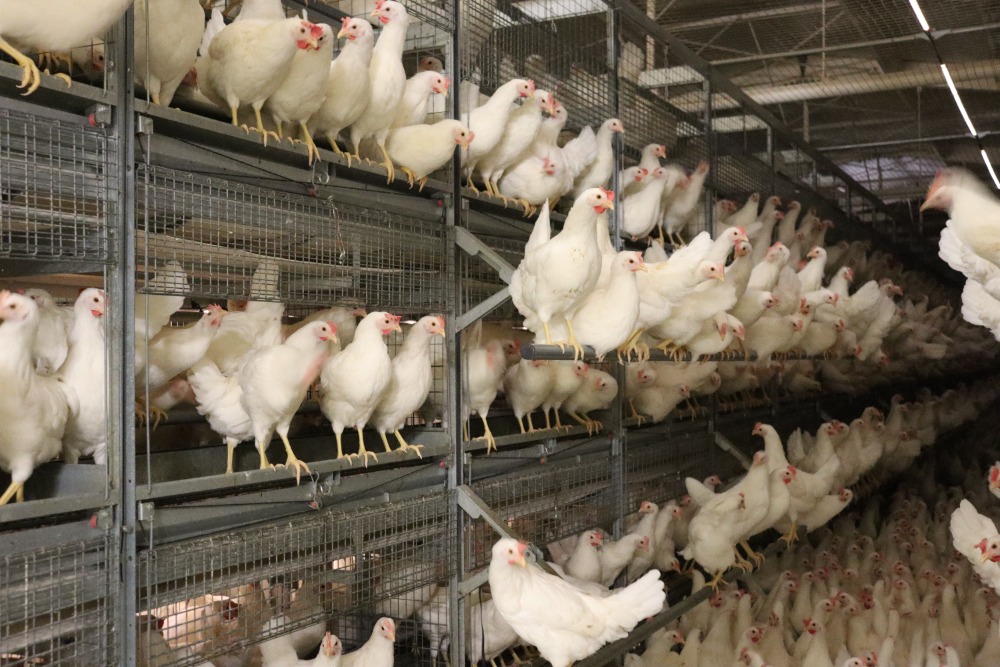
This is a combination of cage and deep litter systems. It usually consists of cage-like structures arranged in two to four tiers, equipped with feeders, drinkers, perches, and laying nests. Litter is placed in the aisles between rows of structures. Droppings fall through slatted floors onto manure belts, which transport them outside the building.
The sloped floor in the nests ensures that eggs roll onto a collection belt connected to a central conveyor transporting eggs for grading and marking.
The advantages include free movement, which positively affects health and condition, stimulation of natural behavior, prevention of claw overgrowth, and reduced feather wear. Multi-level design offers hens more opportunities to escape aggressive individuals.
Disadvantages include the inability to establish stable social relationships in large groups, resulting in more injuries and feather pecking that may escalate to cannibalism. Increased movement also raises dust levels, negatively affecting both birds and staff. Monitoring health is more difficult in large flocks.
Free-Range System
This system combines barn or aviary housing with outdoor access. Covered verandas with litter may be installed along the sides of halls. Hens should have all-day access to an outdoor run that provides shelter from sun and predators. Outdoor drinkers are standard.
Sunlight has a positive effect on the musculoskeletal system, bone strength, and feather quality. As some hens are always outside, indoor air quality (dust and gases) improves.
However, long-term use of runs increases the risk of infectious and parasitic diseases. Losses due to predators may be higher, and the proportion of microbiologically contaminated eggs may increase.
Mobile Poultry Houses
The reintroduction of mobile henhouses may seem retro, but they differ greatly from traditional units that disappeared in the 1960s. These are modern technological units providing comfort, easy management, and constant access to fresh pasture. They are especially suitable for organic farmers with available agricultural land.
Henhouses are typically multi-level. The upper level, where hens perch, eat, and drink, has a manure belt beneath the slatted floor. Hens descend to a lower level of equal size and can access the outdoor run through pop-holes.
To maximize mobility, all systems are powered by electricity from rooftop solar panels. Nest boxes installed under the roof are automatically opened and closed via electromagnets to prevent hens from roosting in them overnight.
Each henhouse has a separate run, providing at least 4 m² per hen. Electric net fencing powered from the henhouse is used. Depending on vegetation and weather, hens should remain in one location for one to two weeks before moving.
With increasing pressure to ensure good living conditions, farm housing systems across Europe are continuously being developed and improved. In poultry farming, environmental enrichment elements are added to prolong feeding behavior and reduce aggression in large groups. Among the top welfare systems are technological concepts such as the Winter Garden or Rondeel, used by Dutch egg producers.
Backyard Keeping
Keeping chickens in gardens and yards is becoming increasingly popular. It provides fresh, tasty eggs and the opportunity to spend time with low-maintenance, friendly animals. Before starting, it is important to understand the specific requirements.
The basic requirement is suitable space. Hens need a coop that protects them from bad weather and predators. Typically, 1 m² of floor space per 4 hens is recommended, though more space is beneficial. The coop must be draft-free.
Basic equipment includes wooden perches about 5 cm in diameter. A removable or easy-to-clean dropping board beneath the perches is recommended. In winter, litter such as shavings or straw should be spread on the floor. Nest boxes lined with hay should be placed on the opposite side from the entrance for privacy. Recommended nest size is about 30 × 30 cm, depending on breed. Feeders and drinkers are essential; hanging drinkers are recommended to reduce water contamination.
An outdoor run is also important, allowing hens to move freely and scratch the ground. At least 4 m² per hen is recommended.
The keeper’s duties include daily cleaning, feeding, refilling water, and general care. However, modern equipment such as large-capacity feeders, barrel drinkers, and automatic coop doors allows keepers to leave even for holidays.
Související články
2. března 2026
Zveřejnil: Ing. Lucie Humeni
Naklíčené obiloviny jsou jednoduchým způsobem, jak obohatit krmnou dávku především u drůbeže. Díky procesu klíčení se zvyšuje stravitelnost živin a zlepšuje jejich využitelnost. Nejde však o náhradu kompletní krmné směsi, ale o vhodný doplněk při správném a hygienickém použití.
19. února 2026
Zveřejnil: Ing. Lucie Humeni
V drobnochovech hospodářských zvířat se často pracuje s menšími objemy krmných směsí. Není proto výjimkou, že chovateli zůstane část granulí nebo sypké směsi i po datu (expirace) minimální trvanlivosti. Lze takové krmivo ještě dále zkrmovat?
2. října 2025
Zveřejnil: Ing. Lucie Humeni
Čmelík kuří je nebezpečný parazit, který způsobuje stres, anémii a snižuje produkci vajec u nosnic. Chemické přípravky ztrácejí svou účinnost a podléhají legislativním omezením. Bylinné výtažky jsou možnou přírodní alternativou, která odpuzuje roztoče a podporuje zdraví drůbeže.
31. března 2025
Zveřejnil: Tým Energys Hobby
Pokud se slepice chovají pro produkci vajec, pak je přirozeným cílem chovatele jich mít od jedné nosnice co nejvíce při co nejnižších nákladech. Za tím účelem se v komerčních chovech využívají výhradně speciálně vyšlechtěné hybridní kombinace nosného typu slepic, kterých se dosáhne křížením různých genetických linií čistokrevných plemen. Tito hybridi si tak z každé linie…
22. května 2024
Zveřejnil: Tým Energys Hobby
Kur domácí, respektive slepice patří k nejdůležitějším hospodářsky využívaným zvířatům, která dávají užitek v podobě vajec a masa. V současné době je kladen stále větší důraz na životní podmínky zvířat, tzv. welfare. To má za důsledek, že se farmáři již začínají připravovat na povinné změny v ustájení nosnic. V následujícím článku je jednoduché shrnutí používaných…
Související produkty
DRŮBEŽ UNI 30
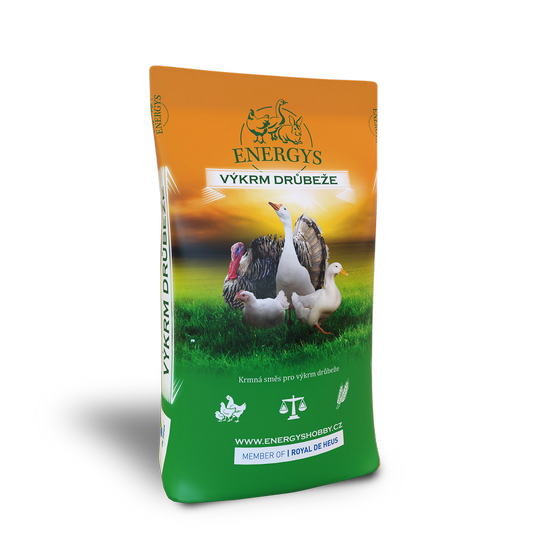
Sypký koncentrát pro výkrm všech kategorií drůbeže, který obsahuje sóju nejvyšší kvality. Míchá se s obilím v poměru 20 – 40 % (dle druhu nebo fáze výkrmu). Přispívá k rychlému růstu a vysoké zmasilosti. Neobsahuje kokcidiostatikum. Lze použít také pro krmení slepic.
NOSNICE REPRO
Granulované krmivo pro plemenné nosnice. Podporuje vyšší líhnivost a zdárný vývoj embrya. Lze použít i pro ostatní kategorie drůbeže. Doporučuje se zkrmovat 1 – 2 měsíce před očekávanou snáškou.
NOSNICE GOLD
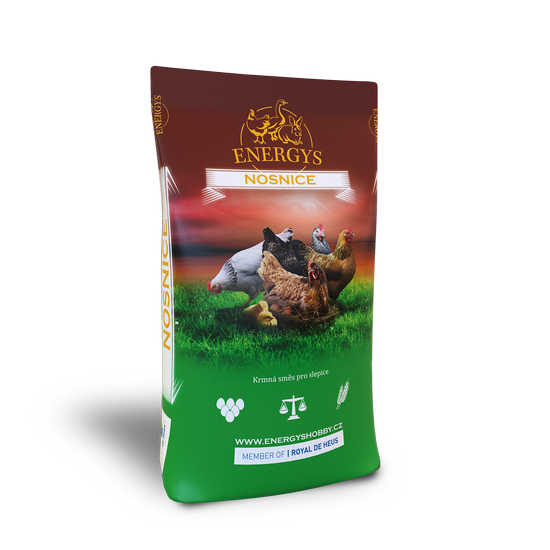
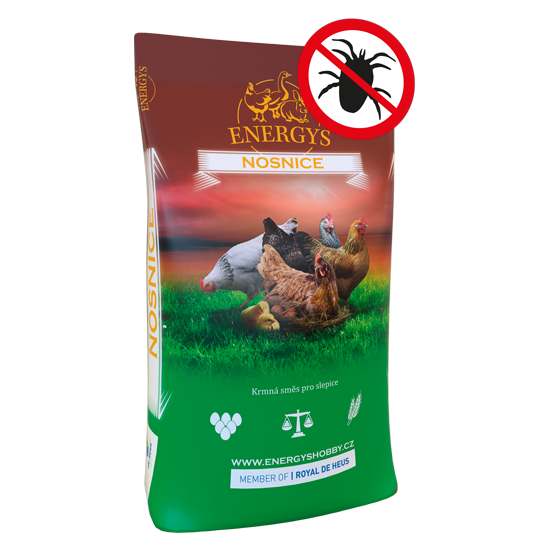
Granulované krmivo pro nosnice ve snášce. Podpora vysoké snášky vajec s pevnou skořápkou a krásnou barvou žloutku. Obohaceno o komplex přírodních látek, který působí proti čmelíkovi kuřímu, podporuje detoxikaci, zdraví jater a prevenci střevních parazitů. Navazuje po zkrmování směsi Kuře MIDI. Krmivo podávejte celoročně pro dlouhodobou ochranu.
NOSNICE KLASIK
Sypká krmná směs určená pro nosnice ve snášce. Svoji hrubě šrotovanou strukturou přispívá k maximální užitkovosti.
KUŘE MIDI
Od 5. týdne do konce 20. týdne stáří kuřic. Navazuje na zkrmování směsi Kuře MINI. Svým složením napomáhá ke správnému rozvoji organismu a k budoucí vysoké užitkovosti. Neobsahuje kokcidiostatikum. Vyrábí se ve dvojí formě, granulované a sypké.
KUŘE MINI
Drcená krmná směs bez kokcidiostatik. Vhodná pro odchov kuřic nosného typu do konce 4. týdne věku. Obsahuje vyvážený poměr živin podporující správný vývoj kuřat. Pro odchov kuřat je následující směsí KUŘE MIDI.